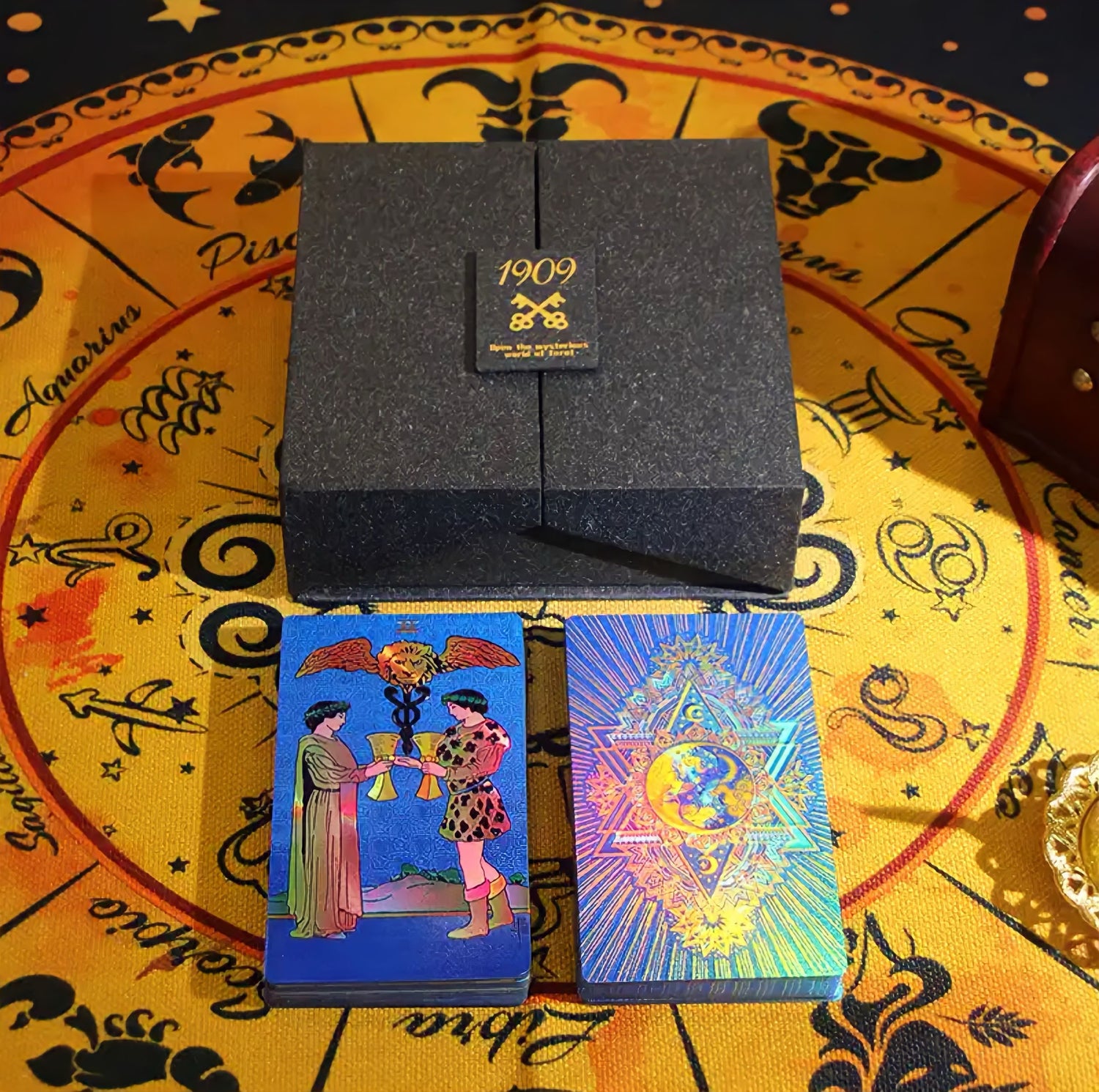

Let the cards organize the question
A Tarot spread is more than a pattern on the table. It gives each card a role, helping you look at a question from several angles instead of searching for one perfect answer.
The best spreads are simple enough to use regularly and open enough to leave room for your own insight. Before you draw, take a moment to name what you want to understand. A question such as “What do I need to see clearly?” usually creates more useful reflection than “What will happen?”

Spread one: the clear path
Use this three-card spread when you are facing a decision or trying to understand what is blocking movement.
- Where I am: What is the real energy of this situation?
- What is in the way: What belief, fear, habit, or outside pressure needs attention?
- My next step: What practical action can I take now?
Read the third card as an invitation, not a command. If it suggests rest, conversation, research, or a boundary, consider how that message could become a specific action in your life.
Spread two: mind, heart, and body
This spread is helpful when you feel divided between what you think, what you feel, and what your daily life can realistically support.
- Mind: What thought or story is shaping my perspective?
- Heart: What emotion, desire, or truth wants to be acknowledged?
- Body: What would help me feel more grounded and supported?
Look for agreement and tension between the three cards. A Swords card in the Mind position may point to analysis or overthinking. Cups in the Heart position may highlight a relationship or a feeling you have been setting aside. Pentacles in the Body position may suggest routines, rest, money, or practical support.
Spread three: release, receive, and respond
Try this spread when you are moving through a transition or consciously creating a new pattern.
- Release: What am I ready to stop carrying?
- Receive: What support, lesson, or possibility is available to me?
- Respond: How can I meet this moment with intention?
The Release card is not always something negative. You might be releasing an old identity, an unrealistic expectation, or a way of protecting yourself that no longer fits. The Receive card can point to help from another person, a skill you already have, or a perspective you have not considered.
How to read the cards together
Start with your first response to each image. Notice which card you want to look at longest and which one creates resistance. Then consider the traditional meaning, the position in the spread, and the way the cards relate visually.
Repeated suits can show where the reading is concentrated. Wands may bring energy and action. Cups may bring relationships and emotion. Swords may bring communication and decisions. Pentacles may bring attention to work, health, money, and the physical world.
Repeated numbers can also create a thread. Aces often speak to beginnings, while tens can suggest completion or a pattern reaching its limit. These details are starting points, not rigid rules.
Turn insight into one grounded choice
When the reading feels complete, write a short summary in your Tarot journal. Then finish this sentence: “The clearest thing I can do next is…” Keep the answer realistic and kind.
Tarot works best when it opens a conversation with your own awareness. Let the spread widen your perspective, but allow your values, experience, and real-world information to guide the final decision.


