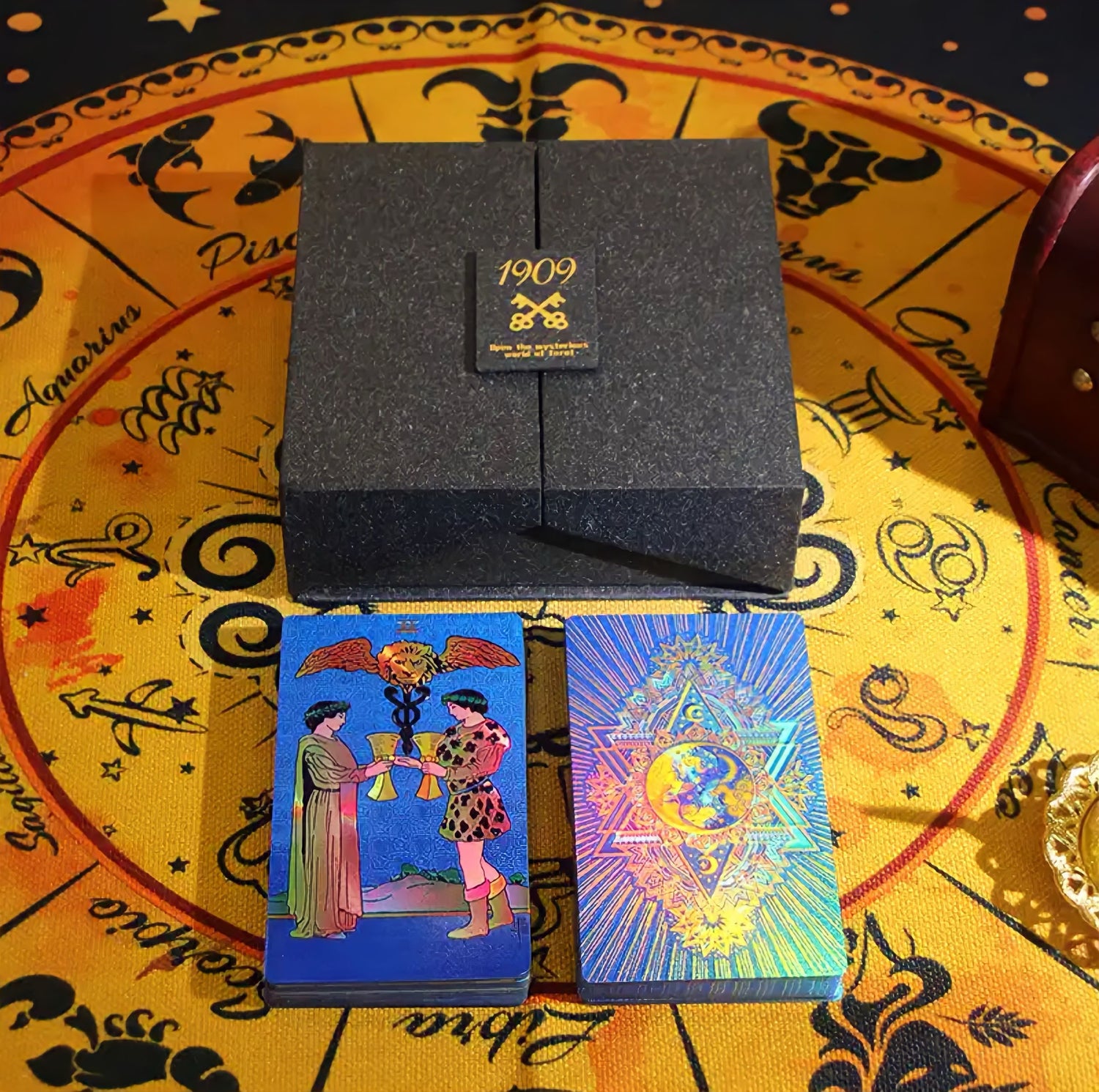


Children notice a deck of cards immediately. Mine did: the pictures are strange and specific, there are people and animals and weather in them, and an adult clearly treats them as important. The question arrives fast. "What are those?" And then, usually within a minute, "can you tell me what's going to happen?"
How you answer that second question matters quite a lot. Handled carelessly, tarot can give a child the idea that the future is fixed, knowable, and out of their hands, which is an unhelpful thing to install in a person. Handled well, it becomes something genuinely valuable: a way of talking about feelings, symbols, and stories with a kid who might not have words for any of it yet.

Start by being clear what it is
The framing I use, more or less verbatim: "These are picture cards. People use them to think about things. They don't tell the future, but they're good for noticing how you feel."
Children accept that easily. It's adults who find the distinction hard. Kids are quite comfortable with the idea of a thinking tool, because that's how they treat most of their toys.
Be direct if they push on prediction. "Nobody can know what's going to happen. That's a bit scary and a bit exciting." That's a true and age-appropriate answer, and it's more reassuring than a false one.
What actually works with children
Pick a card that matches your day
The simplest game, and the most useful. Spread out eight or ten cards face up and ask which one looks like how today went? A four-year-old will point at a picture with a storm in it after a hard afternoon. That's emotional vocabulary building, and it's exactly what child therapists do with feelings cards.
Make up the story
Ask what's happening in this picture? Children produce elaborate, revealing narratives. Don't interpret them aloud and don't turn it into an assessment. Just listen. You'll learn things.
Draw your own card
Give them paper and ask them to make a card for something they're feeling or want. This is the version that tends to last. My daughter's card for "brave" has a shark on it, for reasons that made complete sense at the time.
What to keep away from
Some boundaries are worth holding firmly:
- No readings about family illness, death, or whether someone will be okay. Children take these literally and remember them for years.
- No fear imagery framed as fate. Certain cards look alarming to a child. Either set those aside or explain them plainly, in terms of change and difficult feelings, not doom.
- No using cards to influence behavior. "The cards say you should share" is a manipulation, and children work that out faster than we'd like.
- No reading about their friends. Same consent principle as with adults, and it can turn into playground gossip with unusual authority attached.
Also: ages vary enormously. A twelve-year-old can engage with symbolism thoughtfully. A five-year-old is mostly enjoying the pictures, which is fine and complete in itself.
When another adult objects
This comes up. A co-parent, a grandparent, a school. The most useful response is descriptive rather than defensive: explain that you're using picture cards to talk about feelings, and that you're explicit with your child that they don't predict anything. Most objections are about fortune telling and fear, and that framing addresses both honestly.
If the household genuinely disagrees on it, the relationship matters more than the practice. Keep your own reading private and drop it.
Reflective questions for you, as the adult: What do I want my child to take from this? Am I comfortable saying "I don't know" about the future? What did I believe about fate as a child, and where did it come from?
Why it's worth doing at all
Because children are natural symbolic thinkers and we train it out of them early. A practice that says here is a picture, what do you notice, how does it feel supports attention, emotional literacy, and imagination, and it does so in a form kids find genuinely appealing.
It's a conversation tool. Not a forecast, not a belief system to hand down, and certainly not a substitute for professional support if a child is struggling with anxiety, loss, or anything else that needs real help.
A gentle invitation
Next time a child asks about your deck, try laying out eight cards face up and asking which one looks like today. Then let them ask you the same thing. Answering honestly, in front of a child, is a small and surprisingly clarifying exercise in what your own practice is actually for.


