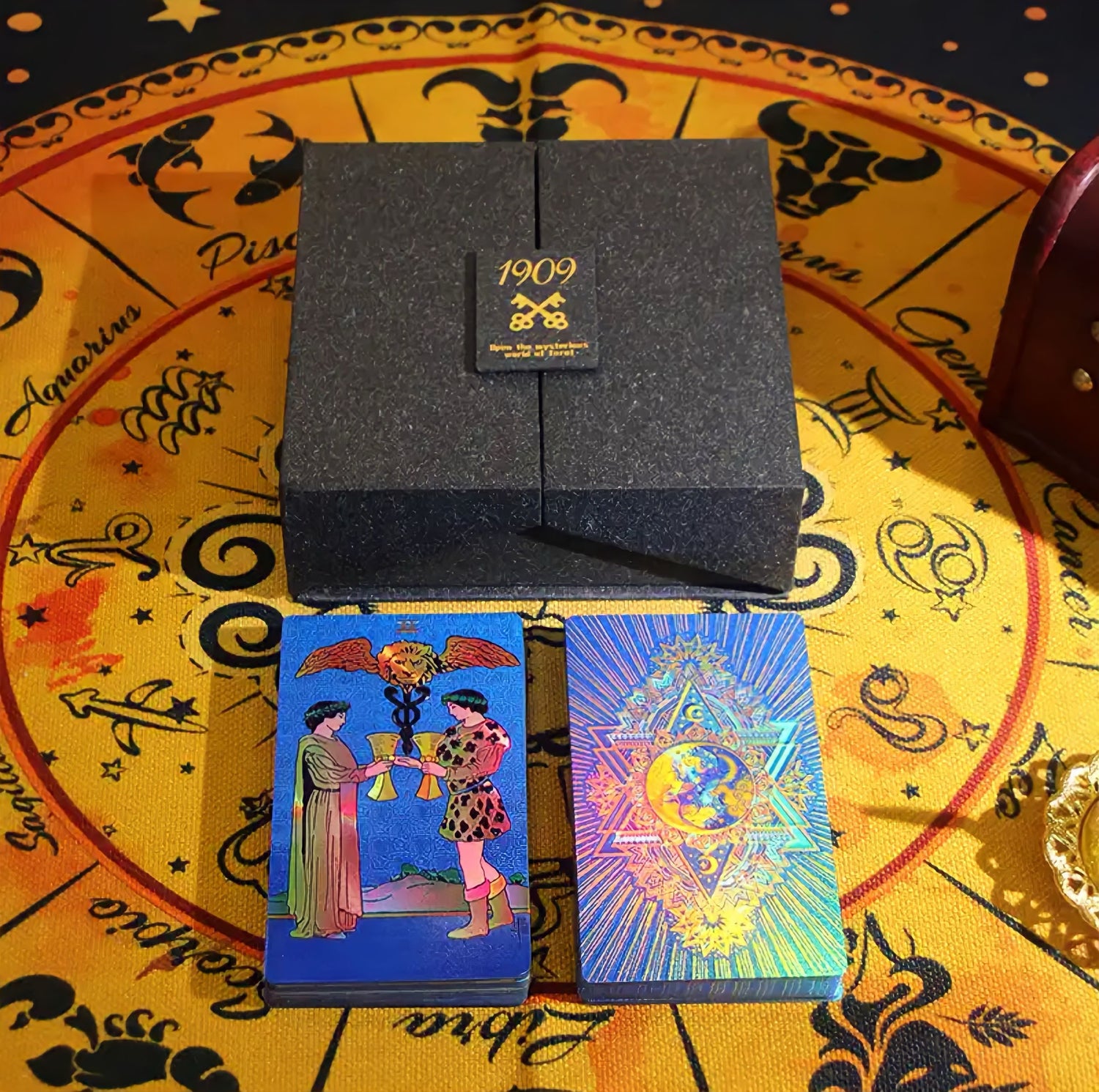

A simple way to begin working with Tarot cards
Tarot does not have to feel complicated or mysterious. A daily Tarot practice can be as simple as drawing one card, taking a quiet moment to notice your first reaction, and asking how its message connects with your life.
The goal is not to predict every detail of the future. Tarot is most useful as a reflective tool. The cards can help you slow down, recognize patterns, explore your feelings, and approach a decision with greater awareness.
Choose a deck that feels inviting
If you are new to Tarot, choose a deck whose images you enjoy looking at. A traditional Rider-Waite-Smith-inspired deck can be helpful because many beginner books and resources use its symbols, but there is no single correct deck. The best deck is one you feel curious about and willing to spend time with.
Keep your deck somewhere accessible. A deck that stays in a drawer is difficult to build a relationship with, while a deck you can easily reach becomes a natural part of your routine.
Start with one card
For your first few weeks, try a one-card reading. Shuffle in whatever way feels comfortable and ask an open question such as:
- What energy can I work with today?
- What deserves my attention?
- What would help me move through today with more clarity?
Draw one card and study the image before looking up its traditional meaning. Notice the colors, figures, symbols, and emotion in the scene. Ask yourself what stands out first. Your personal response is part of the reading, not a mistake that needs to be corrected.
Keep a Tarot journal
Write down the date, your question, the card you drew, and your first impression. At the end of the day, return to the entry and record what you noticed. Over time, you will see how particular cards speak to you and which symbols consistently appear in your readings.
A journal also helps you avoid relying only on memory. Tarot meanings become clearer when you compare the card with your real experiences instead of treating a guidebook definition as a fixed answer.
Read the cards with curiosity
If a card seems challenging, try asking what it wants you to understand rather than assuming it predicts something negative. The Tower, Death, or the Five of Cups can point to change, transition, grief, or release, but their meaning depends on the question and the surrounding context.
Give yourself permission to sit with uncertainty. A thoughtful Tarot reading does not need to provide an instant yes or no. Sometimes the most valuable result is a better question.
Let your practice grow naturally
Once a one-card reading feels comfortable, experiment with a simple three-card spread such as situation, challenge, and guidance. Keep your readings focused, and avoid asking the same question repeatedly until you receive the answer you want.
Your Tarot practice is personal. Use it for reflection, creativity, spiritual exploration, or a combination of all three. The more consistently you approach the cards with patience and honesty, the more useful the practice can become.


