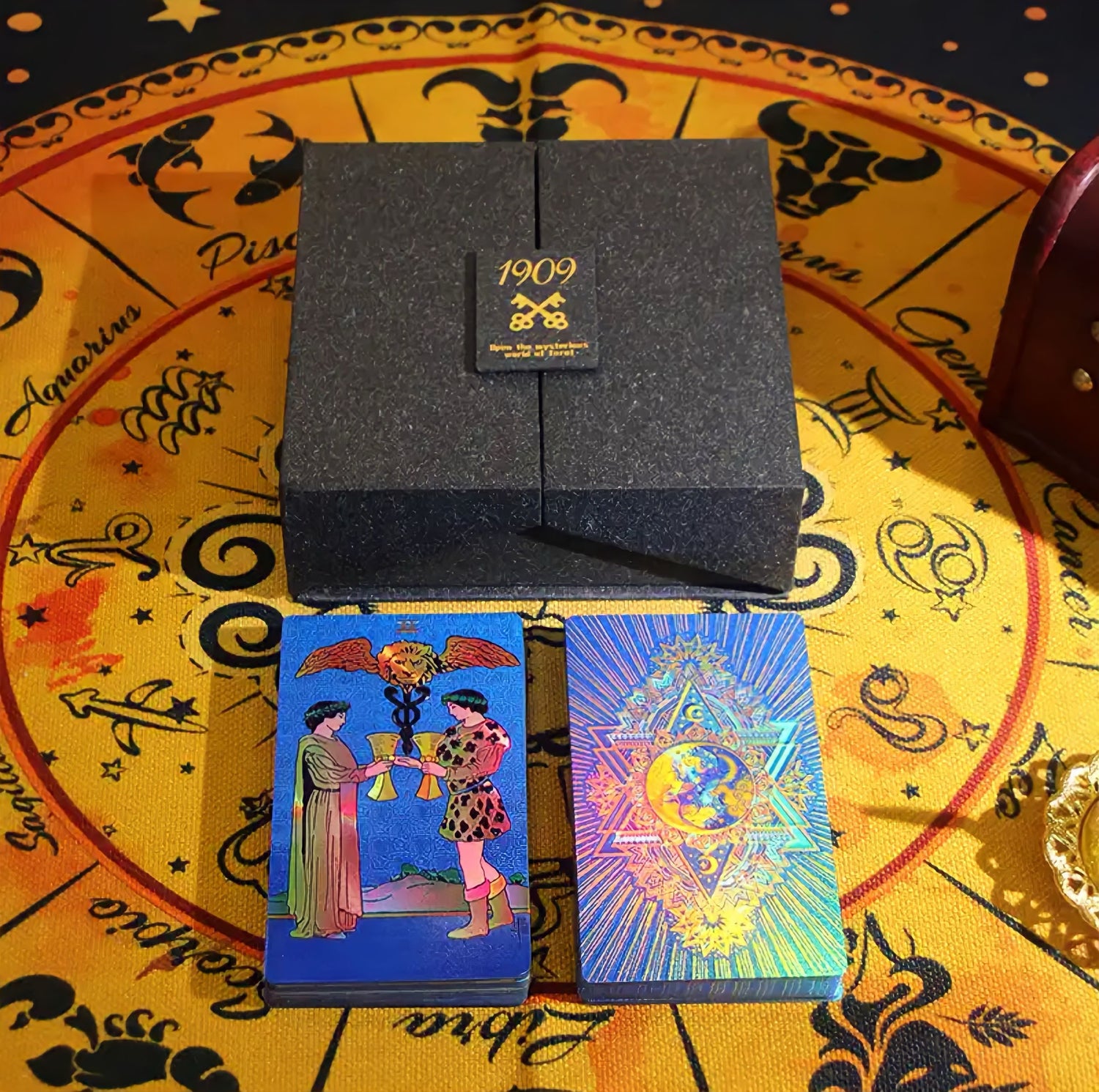

Make your Tarot practice supportive and grounded
Tarot can be a meaningful way to reflect, explore symbolism, and connect with your intuition. A grounded approach keeps the practice useful: the cards can offer perspective, but they do not remove your ability to choose or replace qualified support when a situation calls for it.
Reading Tarot with care is less about finding the perfect prediction and more about creating an honest space for questions, patterns, and possibilities.
Use questions that return your power
Questions beginning with “What,” “How,” or “Where” often create more room for insight than questions that ask for an unchangeable yes or no. Try asking:
- What do I need to understand about this situation?
- How can I approach this conversation with more clarity?
- Where am I giving away my choice or attention?
- What support would help me take the next step?
These questions do not deny uncertainty. They help you meet uncertainty with awareness and identify the actions available to you.
Separate intuition from fear
Intuition can feel quiet, clear, and consistent, while fear often arrives with urgency and catastrophic stories. Neither feeling should be dismissed, but they are worth noticing separately.
When a card brings up a strong reaction, pause before deciding what it means. Take a breath and describe the image without interpreting it. Then ask which part of the card is genuinely informing you and which part may be connected to an old worry.
Do not treat difficult cards as fixed predictions
Every Tarot card has a range of meanings. The Tower can describe a sudden realization, the end of an unstable structure, or a need to stop pretending that something is working. The Five of Swords can point to conflict, but it may also invite you to consider whether winning an argument is worth the cost.
A challenging card is not a sentence. Read it as information about energy, patterns, or choices. Ask what the card makes visible and what response would be most aligned with your values.
Respect privacy and consent
When reading for someone else, make sure they want a reading and understand what kind of reflection you are offering. Avoid using the cards to make absolute claims about another person’s private thoughts, health, or future behavior.
It is often more respectful to focus on the reader’s experience: What can they understand about the relationship? What boundary would support them? What do they need in order to feel safe and clear?
Know when Tarot is not enough
Tarot can support reflection, but it should not be used instead of medical care, mental health support, legal advice, or financial guidance. If you are facing a serious or urgent issue, speak with a qualified professional.
You can still use Tarot alongside real-world support as a journaling prompt. For example, a card might help you name what you are feeling before you make an appointment or begin a difficult conversation.
Close the reading well
When the reading is complete, write down the main insight and one practical next step. Put the cards away, drink some water, stretch, or return to an ordinary activity. Closing the reading helps you carry the useful part of the experience without letting it take over your day.
A thoughtful Tarot practice makes room for mystery and responsibility at the same time. Let the cards widen your perspective, then let your values, experience, and choices guide what happens next.


