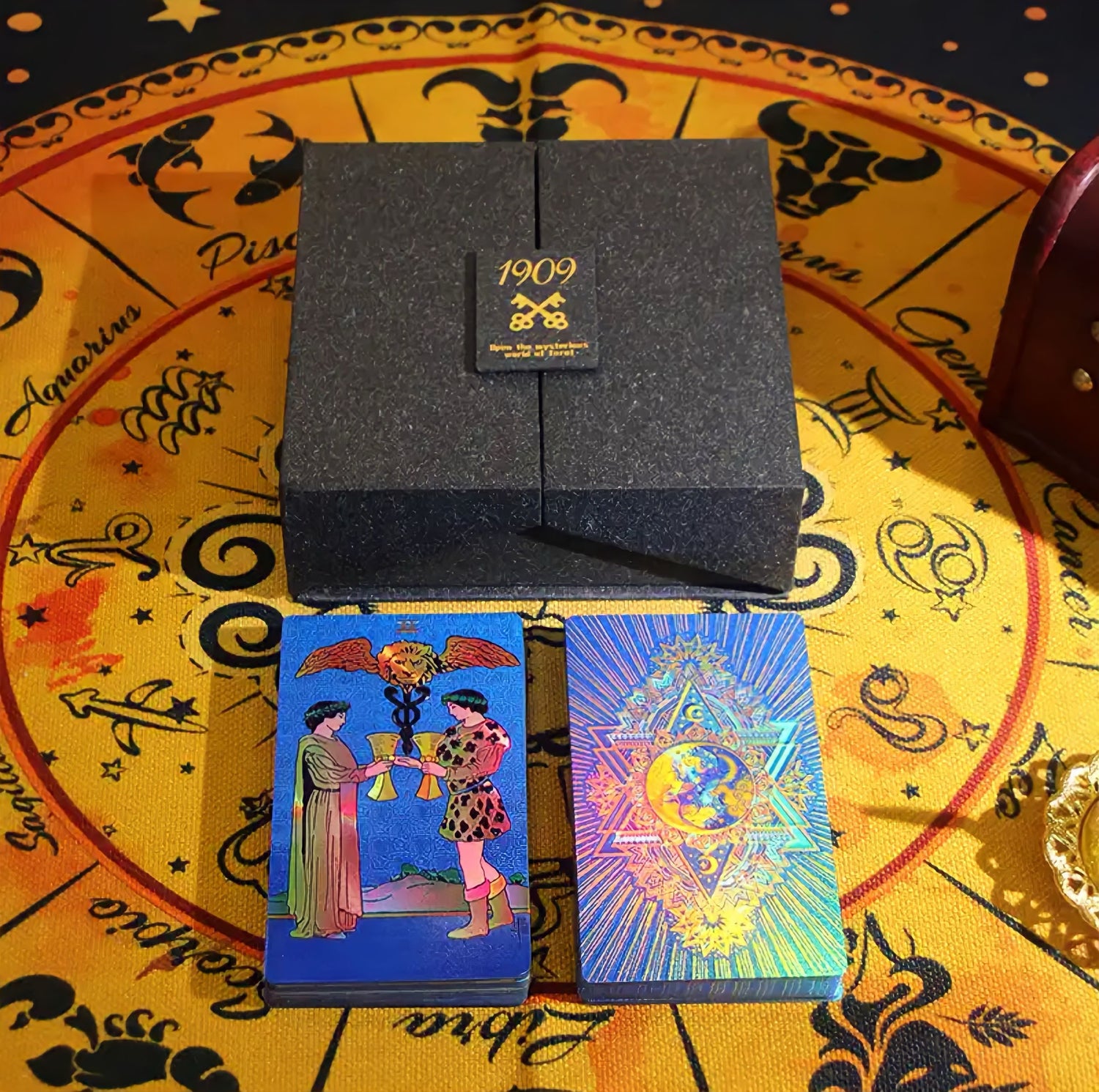

Election seasons can make every conversation feel charged. People bring history, fear, hope, identity, and real stakes to the same public moment. Tarot can help us examine our reactions, but it should never be used to declare an election outcome or replace civic information.
The ethical question is simple: Are we using the cards to listen more carefully, or to avoid uncertainty by asking for a guaranteed answer? A grounded reading does not make a candidate, policy, or community into a symbol detached from real people. It helps us notice our assumptions and decide how we want to participate.

Use the cards to examine your position
Pull one card for the value you want to bring into a difficult conversation. Pull a second for the information you need to verify before speaking. Pull a third for the boundary that will help you stay engaged without turning every disagreement into a personal crisis.
Justice may invite consistency between values and actions. The Hermit may suggest stepping away from commentary long enough to think. The Two of Swords can point to a decision you are postponing, but it is not proof that the future is hidden inside the deck. Let the image open a question, then return to sources, records, and lived experience.
Prediction is not participation
A prediction can feel comforting because it creates the illusion that the difficult part is already decided. Participation asks more of us. It may mean learning about a local issue, checking registration information, volunteering, listening to someone affected by a policy, or simply refusing to share an unverified claim.
Tarot is strongest here as a practice of honest reflection. Let it reveal where you are certain, where you are afraid, and where your actions can be clearer. The future is not a performance for the cards. It is shaped by people making choices together.


